How To Find Your Property On FEMA’s Flood Insurance Rate Maps

What are FEMA flood maps?
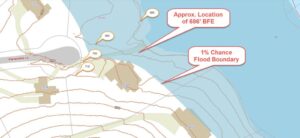
FEMA’s Flood Insurance Rate Maps (FIRMs) or just Flood Maps are provided after a flood risk assessment has been completed or updated for a community.  This study is known as a Flood Insurance Study.  The FIRM gives you the Base Flood Elevations (BFEs) and insurance risk zones in addition to floodplain boundaries.  The FIRM may also show a delineation of the regulatory floodway.

Once the “insurance risk zone”  (commonly referred to as the flood zone) is determined, actuarial rates, based on these risk zones, are then applied for newly constructed, substantially approved, and substantially damaged buildings.  FEMA uses these rates to determine the insurance rate you will pay for flood insurance

FEMA’s Digital Flood Maps

FEMA discontinued the production and distribution of paper flood maps in 2009 as part of its Digital Vision Initiative. This affected all the Flood Maps, boundary information, and study reports. However, clients can still view the products for free through their website or buy them in digital format.

To view these flood maps online, go to FEMA’s Map Service Center and key in your address (hi-lited area shown here) search for your home.  This will prompt you to then select the map that covers your area.  The Flood Maps are somewhat cumbersome to use online. It is best to go through the tutorial on the bottom right of the address search page for an easier and more effective use of the GIS map.

author avatar
Surveyor

More Posts

Surveyors measuring a residential lot with total station equipment before adjusting property boundaries
land surveying
Surveyor

What a Property Survey Shows Before Lot Line Changes

Changing lot lines sounds simple at first. Maybe you want to buy a strip of land from your neighbor. Maybe you want to clean up a weird boundary that never made sense. It feels like a quick fix. Then the survey comes in, and things get real. A property survey

Read More »
Surveyor reviewing land surveying data on a developing property site before construction planning begins
land surveying
Surveyor

When Should You Start Land Surveying for a Project?

Greenville keeps growing. New homes, new shops, and new projects are appearing across the city. With that growth come more rules, more reviews, and tighter timelines. Because of this, the way people plan projects is starting to change, especially with land surveying early in the project. In the past, many

Read More »
Lidar mapping view showing ground elevation beneath a wooded property before land clearing
land surveying
Surveyor

When LiDAR Mapping Makes Sense Before Clearing Land

Buying a wooded lot in Greenville feels like a win at first. You get privacy, shade, and space to build. Then things shift once clearing begins. The ground looks different. Plans start to change. Costs begin to climb. That happens more than people expect. Many buyers walk through a property

Read More »
Vacant land near a road showing site conditions a land survey company evaluates before development
land surveying
Surveyor

What a Land Survey Company Finds on Vacant Land

A recent rezoning approval along Buncombe Street and Butler Avenue in Greenville, South Carolina shows how quickly a quiet parcel can shift into a serious development site. From a distance, it looks straightforward. A vacant corner lot moves toward mixed-use use. But once a project like this starts moving forward,

Read More »

Why Skipping a Home Survey Can Cost You More

Buying a home often feels straightforward once the offer is accepted. But a home survey can reveal details that are not obvious during a walkthrough. In Greenville, SC, where neighborhoods include a mix of older homes and newer builds, those details can affect how you use your property after closing.

Read More »
A residential property showing ground elevation compared to flood level, explaining how an elevation certificate helps assess flood risk before building
flood damage
Surveyor

Before You Apply: Why an Elevation Certificate Matters

Planning a project often starts with excitement. You may already be thinking about designs, materials, or even timelines. However, many property owners move too quickly into permits and planning without checking one key detail first. That detail is your property’s elevation. It’s something most people don’t think about right away,

Read More »