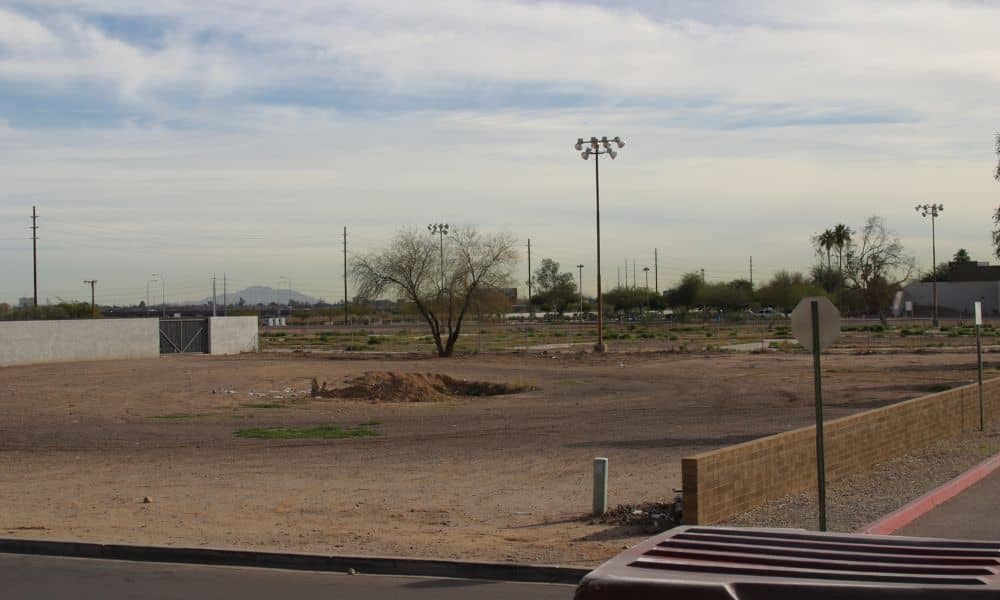
A recent rezoning approval along Buncombe Street and Butler Avenue in Greenville, South Carolina shows how quickly a quiet parcel can shift into a serious development site. From a distance, it looks straightforward. A vacant corner lot moves toward mixed-use use. But once a project like this starts moving forward, the focus shifts from what is allowed to what is actually possible on the ground. That is where a land survey company becomes part of the conversation.
Rezoning Changes the Use, Not the Land
Rezoning changes what you’re allowed to build. It doesn’t change the land itself.
The property still carries what’s already there. Boundaries stay where they’ve always been. Easements still take up space that can’t be built on. Utilities remain where they were installed, not where a plan might assume they are.
In a place like Greenville, South Carolina, a lot of parcels have a long history behind them. Old subdivisions, added utilities, and road changes all leave small details that don’t really show up until someone spends time looking closely at the site.
That’s usually why teams bring in a survey team early on. It helps make sure decisions are based on what’s actually there, instead of assumptions that only get exposed later.
Where Surveying Actually Starts to Matter

A land survey company is not just confirming lines on a map. The role is to establish what is defensible and measurable before design decisions are locked in.
That process brings together record documents and field evidence. It clarifies where a parcel begins and ends, how it interacts with adjacent properties, and what portions of the site are restricted by easements or access requirements.
For a corner property like Buncombe and Butler, this becomes more important. Two frontages mean more exposure to right-of-way limits, access controls, and setback requirements. What looks like added flexibility often turns into tighter constraints once everything is plotted accurately.
The Reality of Corner Lots in Greenville
Corner parcels carry a certain appeal. Visibility is better. Access seems easier. But in practice, they require more coordination.
Development on these sites is shaped by how traffic moves, where entrances can be placed, and how visibility is maintained at intersections. Local requirements influence how close improvements can sit to each roadway and how pedestrian infrastructure is handled.
Once those elements are accounted for, the usable portion of the lot can look very different from what was initially expected. This is where early survey data prevents missteps, because it defines the site in real terms rather than assumptions.
Why Elevation Data Drives Early Decisions
One of the most common sources of delay in redevelopment projects is drainage.
Greenville’s terrain is not extreme, but it is rarely flat in a way that behaves predictably. Small elevation differences can control how water moves across a site and onto neighboring properties.
When a vacant lot is developed, the ground does not respond the same way it did before. Hard surfaces increase runoff. Grading changes redirect flow. Water that once spread out may now concentrate in specific areas.
Without accurate elevation data, these changes are often discovered too late. A land survey company captures those conditions early, allowing engineers and designers to respond before issues surface during construction.
Approval Does Not Equal Feasibility
Rezoning approval signals that a use is acceptable. It does not confirm that a specific layout will work.
There is a gap between what is approved and what can actually be built. That gap is where projects tend to slow down.
It often comes down to details that are easy to overlook at the planning stage. Buildable space may be reduced by setbacks or easements. Access points may not align with real-world conditions. Boundaries described in documents may not match what exists on the ground.
Surveying bridges that gap by aligning legal descriptions with physical reality. It turns an approved idea into something that can be executed without constant revision.
Timing Is Where Most Problems Begin
Survey work is sometimes treated as a step to complete later in the process. That approach tends to create friction.
When accurate site data is established early, it informs design, budgeting, and scheduling. It allows teams to make decisions based on conditions that have already been verified.
When it comes later, it often forces adjustments. Plans shift. Timelines stretch. Costs increase.
A land survey company works best when it is involved at the point where decisions are still flexible.
What This Means for Property Owners Nearby
Projects like the Buncombe Street rezoning do not just affect developers. Surrounding properties are part of the equation once construction begins.
Changes to grading and surface conditions can alter how water moves. Access patterns may shift along nearby roads. Property lines that were never questioned can suddenly become points of concern.
Clear survey data helps establish what is happening on the site and how it relates to neighboring parcels. That clarity reduces the likelihood of disputes as development moves forward.
Starting With Accurate Land Data Sets the Direction
In projects like this, the difference between a smooth process and a difficult one is often tied to how early the site is understood.
Experienced teams choose to start your project with accurate land data because it removes uncertainty before it has a chance to affect design and construction.
It is not an added step. It is the base that everything else depends on.
Closing Perspective
Growth in Greenville, South Carolina continues to move properties from underused to actively developed. The Buncombe Street site is one example of that shift.
What determines how well these projects move forward is not just the approval process. It is how clearly the land itself is understood from the beginning.
A land survey company provides that clarity. It defines the site in measurable terms and gives everyone involved a reliable foundation to work from.