
Buying a wooded lot in Greenville feels like a win at first. You get privacy, shade, and space to build. Then things shift once clearing begins. The ground looks different. Plans start to change. Costs begin to climb. That happens more than people expect. Many buyers walk through a property and feel confident. The land looks smooth. The trees give it a clean, natural feel. However, those same trees hide what really matters. You can’t see the true shape of the ground. You can’t tell how the land moves from one area to another. This is where lidar mapping starts to matter. It gives you a clear view of the land before anything gets cleared.
Why Wooded Lots in Greenville Can Be Hard to Read
Greenville has a mix of rolling terrain and thick tree cover. Because of that, many lots look easier to build on than they really are. A short walk across the property may not reveal much. Everything blends together under the trees.
Still, the ground underneath tells a different story.
Small rises and dips can hide under leaves and roots. Some areas may slope more than they appear. Others may hold water or shift after rain. These details stay hidden until clearing begins, and by then, decisions may already be in place.
So even if a lot looks simple, it often isn’t.
What LiDAR Mapping Shows Before You Clear
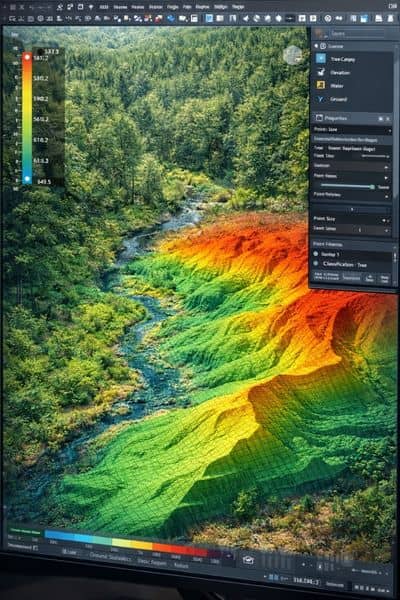
LiDAR mapping measures the ground using laser data. It builds a detailed view of the land surface, even under heavy tree cover. That means you don’t have to guess what’s there.
Instead, you see how the land actually sits.
You can understand where the ground rises, where it dips, and how different areas connect. That kind of clarity helps early in planning, when changes are still easy to make.
Without it, you rely on what you can see. With it, you work with real data.
Why Clearing First Can Lead to Bigger Problems
It feels natural to clear land right away. You want to open the space and start planning. However, clearing too early can create new problems instead of solving them.
Once trees are removed, natural clues disappear. The land may shift during clearing. At the same time, early plans may already be set based on limited information.
If issues show up later, changes become harder.
That can mean redesigning parts of the project, adjusting layouts, or spending more on grading. These problems often trace back to one thing: not understanding the land before work began.
How LiDAR Mapping Helps You Make Better Early Decisions
When you use lidar mapping before clearing, you gain control early in the process. You don’t wait for problems to appear. You plan around them.
You can choose where to place a home based on how the land sits. You can plan access points that match the terrain. You can decide which areas need attention and which ones don’t.
Because of that, the project flows better.
Instead of reacting during construction, you move forward with a clear plan. That reduces stress and keeps costs from getting out of hand.
Where Many Property Owners Get It Wrong
A lot of issues start with simple assumptions. A lot looks flat enough, so it must be easy to build on. Any small problems can be handled later during grading.
That thinking leads to trouble.
Without detailed data, plans often rely on guesswork. Once work begins, those guesses get tested. Some hold up. Many don’t.
Then adjustments follow, and each adjustment adds time and cost.
LiDAR mapping helps avoid that cycle. It replaces assumptions with a clearer understanding of the land.
When LiDAR Mapping Makes the Most Sense
Not every lot needs this level of detail. A small, flat, cleared lot may already be easy to work with. In that case, simpler methods can do the job.
However, wooded properties in Greenville often benefit from it.
Larger lots, uneven terrain, and thick tree cover all make it harder to see what’s really there. In those cases, lidar mapping gives you a better starting point.
It helps you plan with confidence instead of guessing.
How LiDAR Mapping Fits Into the Full Survey Process
LiDAR mapping does not replace traditional survey work. You still need boundary surveys to confirm property lines. You still need construction surveys to guide building.
However, lidar mapping supports the early stage.
It helps shape the plan before those next steps begin. That way, when survey and construction work starts, it builds on a stronger foundation.
Plan First, Then Clear
Wooded land can be deceiving. What looks simple at first can turn complex once work begins. Clearing without a clear plan often leads to changes later.
Planning first changes that.
LiDAR mapping gives you a better view of your land from the start. It helps you understand what you’re working with before you make big decisions.
For anyone looking to build on a wooded property, that early insight can make the entire project smoother from day one.